Artificial Turf Installation for Sloped Yards
Maintaining the health and appearance of natural grass on sloped yards is sometimes tricky. The steeper the slope, the more difficult it becomes to maneuver lawn mowers and other equipment. To minimize your lawn maintenance needs, you might consider professional turf installation in Dallas, but how hard is it to install artificial turf on a slope?
At Total Turf Works, we're experts at installing high-quality synthetic grass in outdoor spaces, regardless of the steepness of the areas we work on. Here, we outline what to expect when laying turf on uneven ground and offer tips to make the process more efficient.
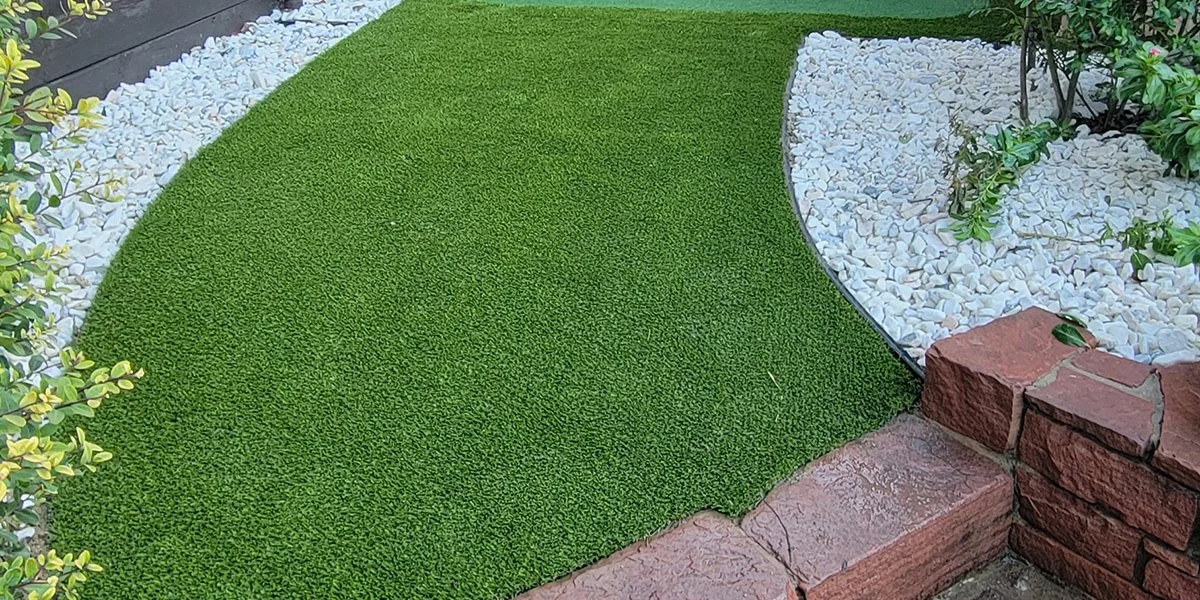
Key Benefits of Professional Turf Installation in Dallas
Unlike natural grass, artificial turf requires no mowing, fertilizing, or watering, which saves time on lawn maintenance. Modern turf also has a more natural appearance, giving yards a stunning look in every season.
These days, many people are embracing the functionality and visual appeal of high-quality synthetic grass. Property owners who get turf installation in Dallas appreciate the material's minimal maintenance requirements, long-term usage, and safety, making it ideal for children, pets, and high-traffic areas.
Typical Challenges of Installing Turf on Slopes
Installing synthetic grass on a slope isn't without its challenges. Common issues include:
Added stress on the turf from foot traffic: The steeper the incline, the more the turf may shift from people walking on it. Properly installed turf can withstand heavy foot traffic, making it a good option for busy outdoor spaces.
Erosion from water runoff: If the base material isn't compacted enough, rain can wash it away, creating weak spots in the lawn.
Gravity: Without a proper installation on an incline, turf may slip downward over time.
How To Install Artificial Turf on Sloped Land in Nine Steps
Is it possible to install artificial turf on a slope? While you can definitely have artificial grass on uneven ground, the installation process is usually a little different from a routine installation on flat land.
Here are the general steps installers follow in these cases:
Prepare the area: The crew will remove grass and debris from the work site.
Install hanging timbers: Hanging timbers hold the turf up at the top of the bank to prevent sliding.
Lay timber around the perimeter: Next, they install timbers around the perimeter of the installation site and elements within the site, like trees.
Add a layer of aggregates: Before the infill material application is the aggregate application. Two to three inches of material are usually necessary.
Apply granite dust: Then, the team will lay down about an inch of granite dust, which they tamper down to create a dense sub-base.
Add the weed membrane: The weed membrane keeps the dust on the slope and prevents it from rolling downhill.
Lay the synthetic grass: Finally, the team lays down the artificial grass, starting at the hanging timbers.
Secure the joins: Strong nails keep the joins secure and the turf in place.
Powerbroom the grass: Heavily sanding the grass pushes it into the ground for added security. Afterward, installers power-broom the grass to remove debris and give the lawn a polished appearance.
Tips for Securing Turf on Hilly Areas
Remember these tips if you're considering artificial turf on a slope in your yard:
Create a Strong Base Layer
Rather than using a crushed rock sub-base alone, lay an extra layer of geotextile fabric. A sturdy sub-base installation helps prevent erosion while stabilizing the ground.
Use Adhesive
For extra hold when installing artificial turf on a slope, apply a layer of landscape-grade adhesive on the base of the turf. This option is ideal for steep slopes, where the synthetic grass is most likely to slip out of place.
Secure the Edges Properly
Securing turf edges is essential to prevent the material from lifting around its perimeter. Options include nailing the edges every four to six inches on the slope, using turf glue along the perimeter, and using perimeter boards for added stability.
Contact Total Turf Works for a Stunning Turf Installation
Installing artificial turf on a slope doesn't have to be a time-consuming process with undesirable results. Despite the challenges of installing turf on hilly property, our team at Total Turf Works knows how to do the job right. As an experienced synthetic grass installer serving Dallas, Texas, we take the time to install premium materials efficiently, creating beautiful exterior surfaces with a natural appearance.
We expertly handle everything from proper ground preparation to drainage system installation to prevent puddling. We're ready to transform your yard in Dallas, so contact Total Turf Works at (817) 646-5527 to request a free quote.