
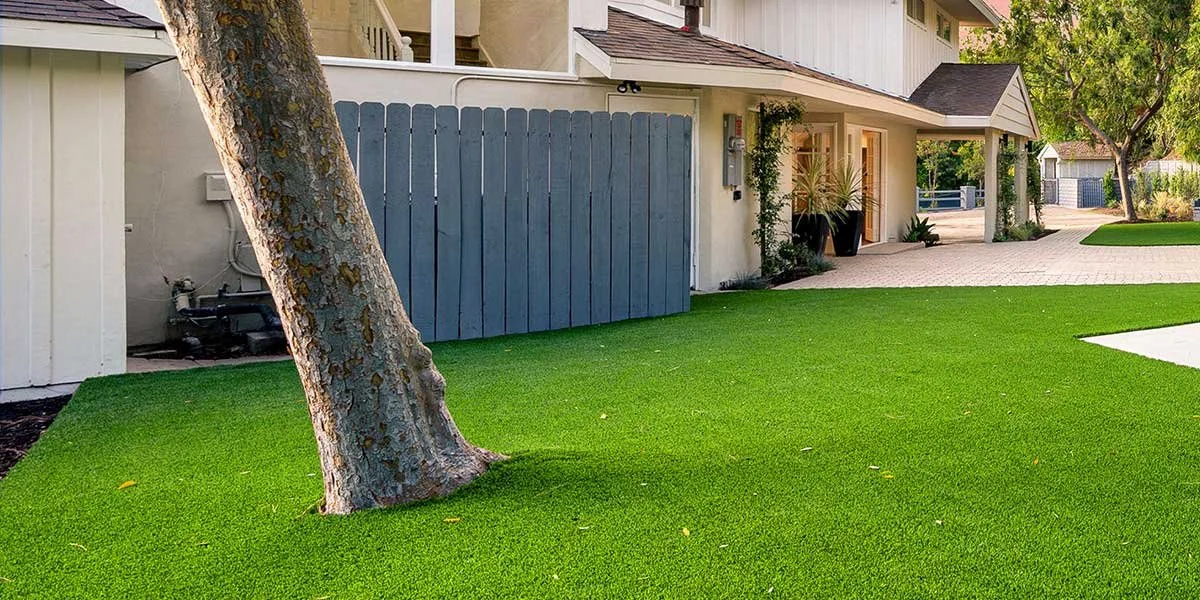
When grass beneath a mature tree keeps thinning despite regular care, it can leave your yard looking uneven. If you're considering artificial turf in Fort Worth to cover that bare patch, could it affect established tree roots? Existing conditions should shape your decision.
In this guide, Total Turf Works explains the installation precautions that help protect roots during landscaping.
Is Artificial Turf Suitable Around Your Trees?
Synthetic turf can coexist with mature trees when the installation respects the surrounding root system. An arborist should assess the area before work begins, since ground preparation may cause damage or alter soil conditions.
Covering a tree's root zone, for example, requires closer evaluation than laying synthetic grass elsewhere in the yard. A permeable product does not automatically make installation suitable; drainage is only one consideration.
Start With an Assessment of the Tree and Site
Assessing tree root health helps determine whether installation is appropriate and what precautions may be needed. Ask a qualified arborist to review:
Species and maturity: Determine how well the tree may tolerate disturbance.
Existing condition: Check for canopy thinning or previous damage that could affect suitability.
Visible roots: Identify areas where ground preparation could cause harm.
Site conditions: Evaluate drainage and sun exposure for potential installation constraints.
Discuss these findings with your contractor and ask questions about artificial grass to clarify the proposed approach.
Plan Space Around the Whole Root System
Planning artificial turf around trees may involve leaving the root flare exposed while reserving more than just a small opening at the trunk. Tree root protection starts with an arborist-defined exclusion zone to guide the installation boundary. This zone keeps any ground preparation away from sensitive areas.
No single clearance distance works for every species, since roots may extend beyond the canopy. Site-specific findings provide a better basis for planning than trunk measurements alone.
Handle Ground Preparation With Care
Proper turf installation near an existing tree requires ground preparation that follows the established protection plan. Excavation and soil-level changes should reflect site conditions rather than a standard approach applied across the yard.
Cutting roots simply to level the surface may harm tree health or compromise stability. It is also important to keep compaction equipment and material stockpiles outside the exclusion zone throughout construction. Even temporary weight can compact the soil.
Preserve Access for Future Tree Care
An installation should allow future tree services without requiring replacement of the entire lawn. Ask which sections could be lifted if an arborist needed direct access beneath the finished surface. Discuss whether seams can be positioned to make local removal easier.
You should also confirm who would handle reinstatement after specialist work and whether those repairs could affect your product warranties. Retain the supplier's contact details and ask about matching replacement material.
Account for Watering and Drainage Needs
Replacing natural grass might change the surface, but established trees will still need adequate moisture. Putting artificial turf around trees may lead to compacted soil or dense installation layers that can restrict water and air circulation for roots.
An open planting area with mulch set back from the trunk can support soil moisture retention without holding damp material against the bark. Check soil moisture before adjusting irrigation, since removing surrounding grass doesn't automatically mean you need to water more.
Consider Heat Exposure Beneath the Canopy
Artificial grass can absorb substantial heat in direct sun, so don’t assume shaded areas will remain consistently cool. Check how exposure changes across the day, especially where sunlight reaches beyond the canopy.
Discuss any heat concerns with the arborist before selecting materials. Shade patterns can change after pruning or seasonal leaf loss, exposing areas that previously stayed covered. Treat cooling claims cautiously, and don't assume a product will stay comfortable throughout summer afternoons.
Monitor Tree Health After Installation
Caring for artificial turf around trees involves more than routine cleaning. Include these checks in your maintenance plan:
Remove fallen leaves and seedpods using manufacturer-approved tools.
Have new lifting or uneven areas assessed before altering the turf or underlying ground.
Watch for thinning foliage or unusual leaf discoloration, noting any branches that are dying back.
Trees may show signs of installation-related stress gradually, so problems aren't always obvious when the work is completed.
Plan Your Landscape With Total Turf Works
Total Turf Works helps you explore layouts that account for site conditions and an arborist's recommendations. We provide installation and maintenance across Dallas-Fort Worth, planning each project around the existing landscape.
Before scheduling, read our guide to the right time to install turf. Call us at (817) 857-6454 to discuss artificial turf around trees for your property.